

How esports are becoming a traditional sport in high schools across the US.
by Rachel Olsen-Cooper
Athletic sports in high schools are commonplace for most schools in the United States. The U.S. Government Accountability Office found that in the 2013-2014 school year, 77% of public high schools offered sports programs. But not everyone can be an athlete. It can take years of practice, discipline, and physical capabilities to perform at the high school level and beyond. However, some are starting to find another way to still be a part of a team.
According to the National Educators Association, esports was recognized as an official sport by the National Federation of State High Schools in 2018. Since then, more than 8,600 schools have started esports teams. TEXSEF, the Texas Scholastic Esports Federation, says that the state has over 150 schools that now have esports teams, with almost 2,000 students participating. In April, around 500 of those students gathered in Arlington to take part in the TEXSEF State Championship, where students competed in titles such as Overwatch, Valorant, and Super Smash Brothers, just to name a few.
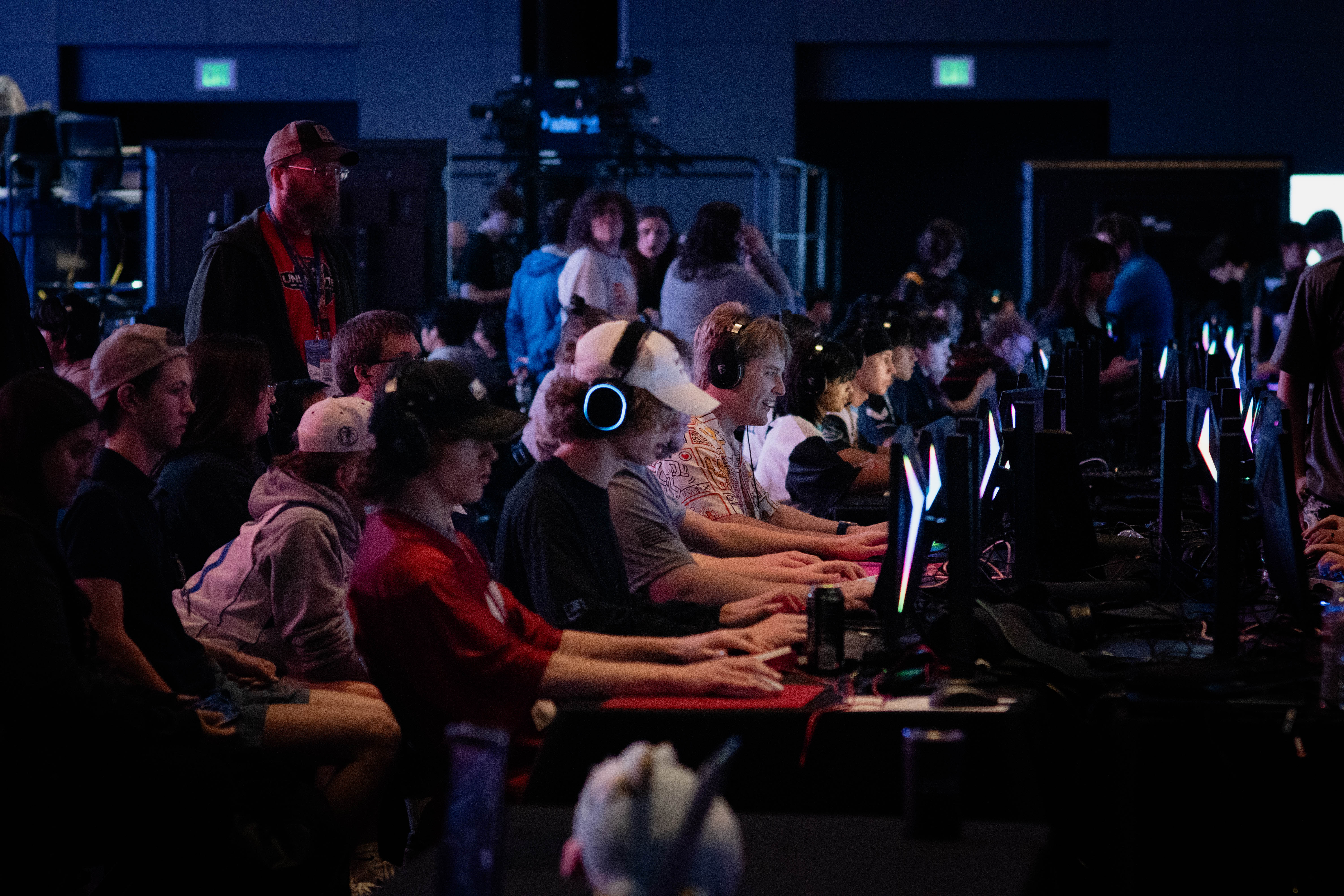
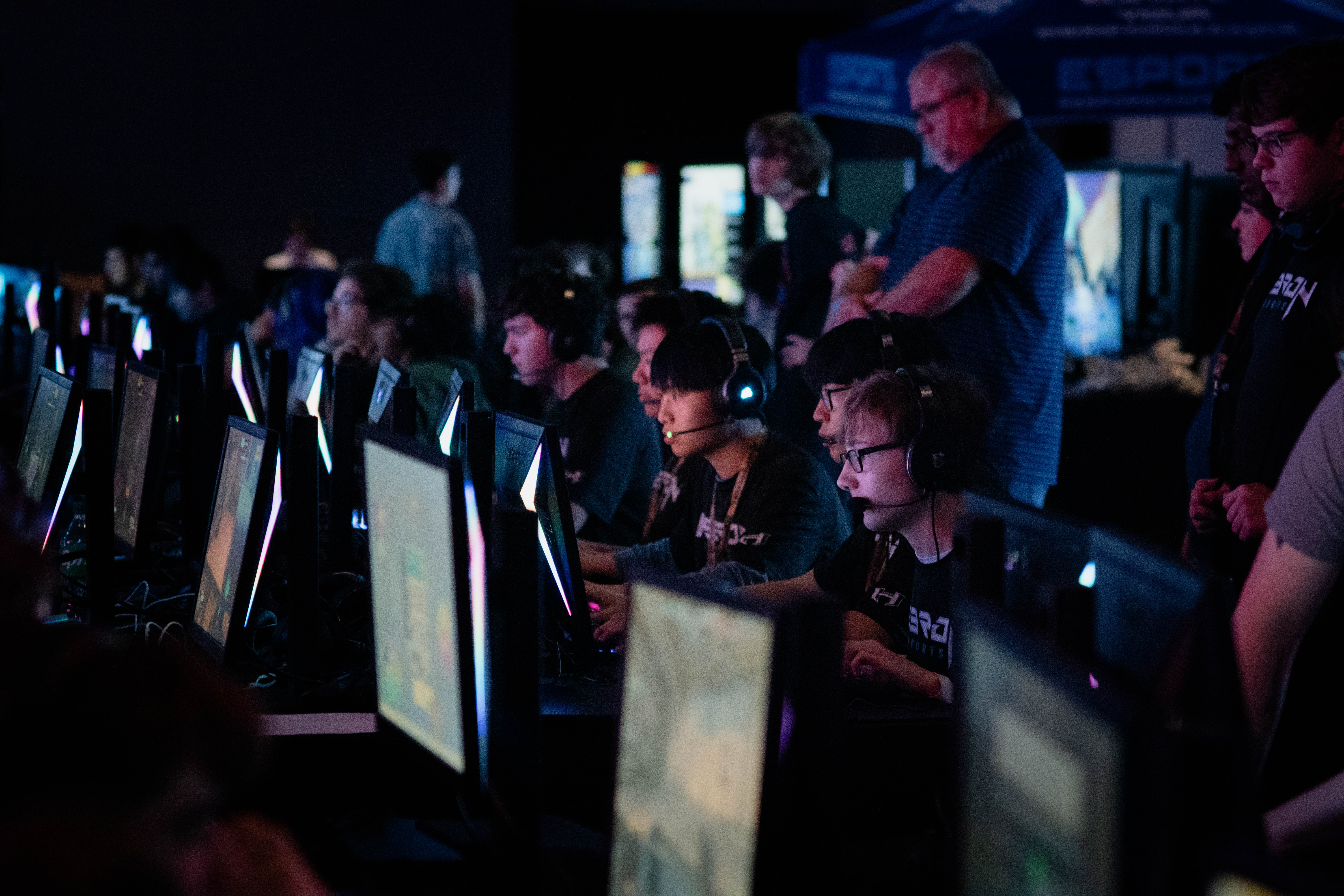
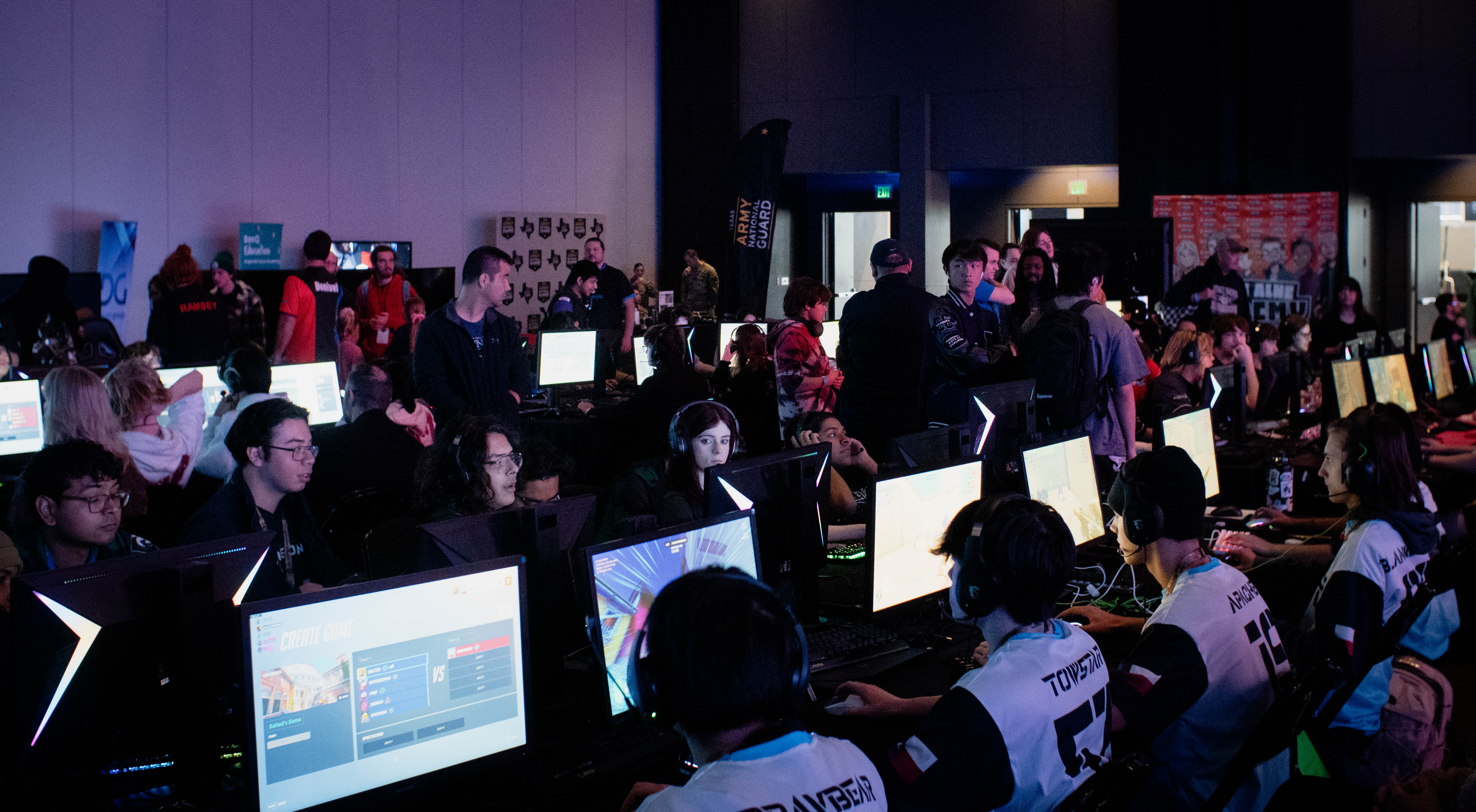
Students participating in the TEXSEF State Esports Championships, April 28-29, 2023. Photos by R. Olsen-Cooper
EKUSO, a youth esports development program working with schools to provide esports programming and curriculum, has capitalized on the growth of esports in schools by offering students a way to experience a traditional sports setting, but through video games.
Karlin Oei, EUKSO’s founder, used his own experience with high school and college esports as a steppingstone to create this organization.
“In high school, I discovered this game called League of Legends,” says Oei. “My school was 0-18 in football. So, League became our football. If you were good at it? You became the cool guy.”
During his time as a collegiate esports athlete, he helped lead a new team to a top 8 placement in the nation. After graduating, right in the height of the COVID pandemic, he created EKUSO as a way to bring the fundamentals of learning through esports and give students the ability to be a part of a team, all the while being in a virtual setting.
EKUSO is one of many youth programs that are trying to develop the skills of young gamers to lead them into the future of gaming. Another organization called XP League models themselves off of youth sports organizations, and they consider themselves the little league of esports.
Sari Kitelyn, owner of the Orlando chapter of XP League, says that there are many comparisons between esports and traditional sports.
“They’re learning how to be coached and play as part of a team. They’re learning how to bounce back from a loss, as well as how to support their teammates and how important practice is.”
Kitelyn has been the Director of Esports and Project Development for Full Sail University for the past 15 years. Being a part of esports since its early stages has allowed her to see the growth from students who participate in organizations like XP League and EKUSO.
“A ton of kids have experience playing video games, but very few have experience competing in esports, which can put them at a disadvantage when entering high school or starting to explore potential college scholarship opportunities. When they enter high school and are already coachable, they have in game communication skills and the ability to bounce back from a loss, which is a huge advantage in regard to opportunity.”
With esports in schools being such a new experience for many, Oei does have some advice for parents who might be on the fence about letting their child play video games as a sport.
“Get educated. Read papers, look into different aspects, and don’t just lean into one resource. Read counterarguments (to esports in schools) and find the middle ground.”
Kitelyn agrees, saying that a lot of parents are wary due to a lack of understanding.
“Being able to show that their kids can develop the same skills that they do in something like little league has really been helpful.”
EKUSO currently has four partnered schools and working towards a goal of twenty by the end of the year. They offer individual students a way to learn as well, along with helping them find teams to compete with and even help their schools start their own esports programs. Learn more at http://ekuso.gg
XP League has multiple in person training locations across the United States and Canada. Learn more at http://xpleague.com
 The Spawn Room
[…] many wanted to show that children can experience gaming the same way they do traditional sports. In July, Karlin Oei and Sari Kitelyn talked about the similarities between esports and traditional sports in programs like EUKSO and XP […]
LikeLike