
How the gaming community can use their voices to create a more inclusive industry
In early 2020, COVID-19 had infiltrated the US and was affecting the lives of many, even if they weren’t infected. People were laid off due to safety, others changed to remote work. Schools were shut down and became purely remote. The mask and vaccine debate were hot button topics on every news station, along with reports of how many people were losing their lives to COVID daily. The world was stuck inside, bored, trying to keep their spirits alive.
According to Forbes, in-home entertainment became the main source of sanity, with digital media increasing to 82% of theatrical, home/mobile revenue in 2020, compared to 2019 that saw 55% of shared digital revenue.
But it was the video game industry that saw major growth during the height of the pandemic. According to Nielsen, 82% of global consumers were playing video games or watched video game content during the early months of the COVID-19 lockdowns. Nielsen states that gaming increased by 46% in United States alone. And while Statista reports that the number of gamers worldwide was around 3 billion in 2022, around 212 million of those gamers live in the United States, and around 49% of them are female, accounting for almost half of players.
With so many women finding interest in video games, the interest of women wanting to play professionally in esports is shocking. According to The State Press at Arizona State University, in 2022 about 8.2% of college esports players were women, with only 4% of coaches being women. That number declines drastically according to Women in Games, with women accounting for only 1% of professional esports players, and around 5% of the overall esports’ workforce being comprised of women.
If the gaming industry is split down the middle of who plays games, why is there such a low interest in esports for women? It’s a question that has been on the minds of many in the industry over the last few years, with a variety of different programs and resources wanting to help introduce more women and marginalized genders into the esports and gaming industry, all in the hopes of proving that video games are no longer a stigma, and that gaming truly can be for everyone.
Women and Video Games – A History
Women in the gaming industry is nothing new. In fact, women have been a dominant force in gaming’s history, going back to 1964. According to Games Radar, a teacher named Mabel Addis was the first woman to level design for a video game, the first woman to be credited as a creator of a video game, and the first person to ever write a video game. The game, called The Sumerian, was a text based economic simulation game that was written to be accessible for children.
Addis was the original trailblazer of women in the gaming industry, with many others that followed in her footsteps. Carol Shaw, who started with Atari then moved on to Activision, created the best-selling River Raid in 1982, a jet pilot shooting game. Dona Bailey helped create the 1981 arcade game Centipede with Asteroids designer Ed Logg. And in 1988, Nintendo launched Nintendo Power, a publication that not only promoted the company’s games, but provided hints, tips, and maps for some of their popular games, all with advertising manager Gail Tilden at the helm.
Just recently, Microsoft named Sarah Bond as the president of Xbox. To see women go from creating the games to leading one of the biggest brands of the gaming industry shows the strides that have been made over time to have women more visible in a male dominated industry.
But this positive light that has been shown on the industry has not come with its faults.
Gamergate and Harassment
Video games had an exciting year in 2014, with games like Destiny, Super Smash Bros. for Wii U and Dark Souls II leading the charge, and the new generation consoles receiving releases like Grand Theft Auto V and remasters of The Last of Us and Diablo III. But it can also be looked at as a dark time in the gaming community, all due to an event known as Gamergate.
Gamergate began when an ex-boyfriend of a gaming developer named Zoe Quinn had written in blog posts that the reason they received a glowing review for their game Depression Quest was because they were having a relationship with a journalist at Kotaku named Nathan Grayson.
According to Jeremy Freed, an instructor at the University of Utah, who wrote about Gamergate for Media Report to Women in 2017, Grayson did have a relationship with Quinn, but never wrote about her games or reviewed Depression Quest. Kotaku had investigated the allegations and came to the same conclusion.
Quinn, who now uses they/them pronouns, received massive amounts of hate and harassment. Many in the gaming community couldn’t figure out why Depression Quest was winning awards. The game itself, which tackles mental health as its main theme, didn’t sit well with gamers in the community, claiming that journalists were helping feminist members of the gaming community get ahead, according to The Daily Dot. But as they point out, the blog in question never alleges that Quinn used the relationship she had with Grayson to advance the reviews of Depression Quest. Not only was it getting rave reviews, but it won multiple awards as well.
Sari Kitelyn, the Director of Esports at Full Sail University, was just getting started in the industry when Gamergate was at its peak. She feels that the reasons gamers had a tough time believing that this game, which wasn’t a traditional shooter or role-playing game, was receiving the praise it did was because she was a woman who got her foot in the door and broke barriers to get into a male-dominated industry. “I think Gamergate really proved that any success that you achieve (as a woman) often feels like it’s got an asterisk,” Kitelyn said.
And this is just one of many high-profile cases of harassment. Others include media critic Anita Sarkeesian, who received death threats around the same time as Quinn for her YouTube series about gaming tropes, as well as claims of sexual harassment against popular creators in the Destiny 2 community.
The source of the harassment starts at the ground level with the women who are playing the games day in and day out, taking the brunt of the toxicity. According to a study by the Anti-Defamation League (ADL) in 2019, 65% of gamers have experienced severe harassment playing games online, including physical threats, stalking, and sustained harassment, while 74% of gamers have experienced some sort of harassment when playing online multiplayer games. Of those players, the ADL says, 53% of them are being targeted because of their race, religion, ability, gender, gender identity, sexual orientation, or ethnicity. The ADL says that 38% of women and 35% of LGBTQ+ players are harassed based on their gender and sexual orientation.
Jasmine Manankil, a professional Valorant player, says that she was use to experiencing toxic in-game chatter. “I grew up playing Counter-Strike, and it’s known for being a very toxic community,” Manankil said. “So, playing throughout Counter-Strike in that toxic environment non-stop, I learned to build up that thick skin.”
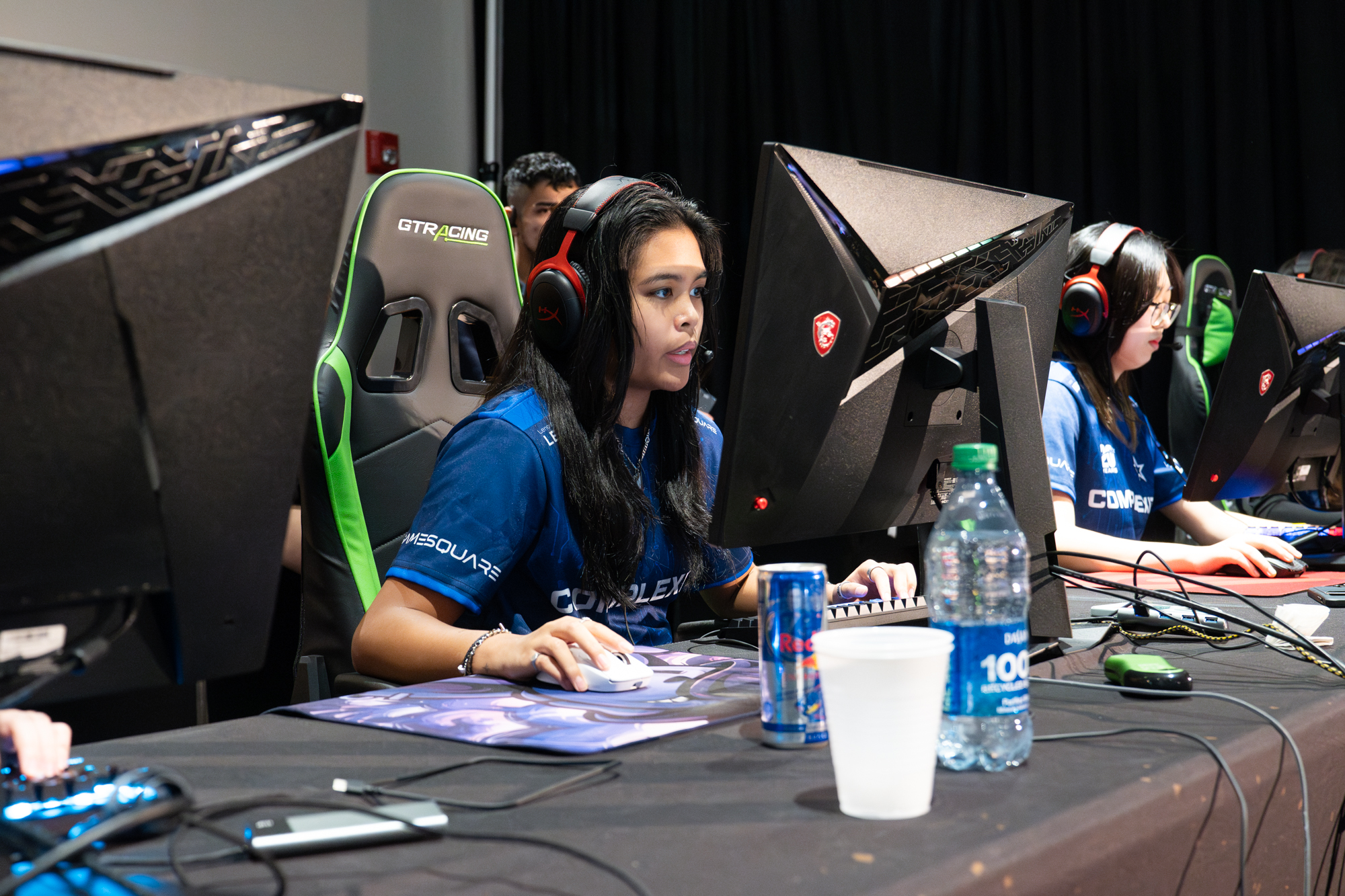
Jaden Stone, also a professional Valorant player, says that even though they use a voice changer to sound more masculine, once players realize that they’re not cis-male, the attitudes can change fairly quickly. “If you have a good K/D (kill-death ratio), they’re nice or they’re flirty,” said Stone. “If you have a bad K/D, they start to shit-talk a little bit or tear you down or throw (the game). I honestly yell back at this point. If they’re toxic, I’m toxic back.”
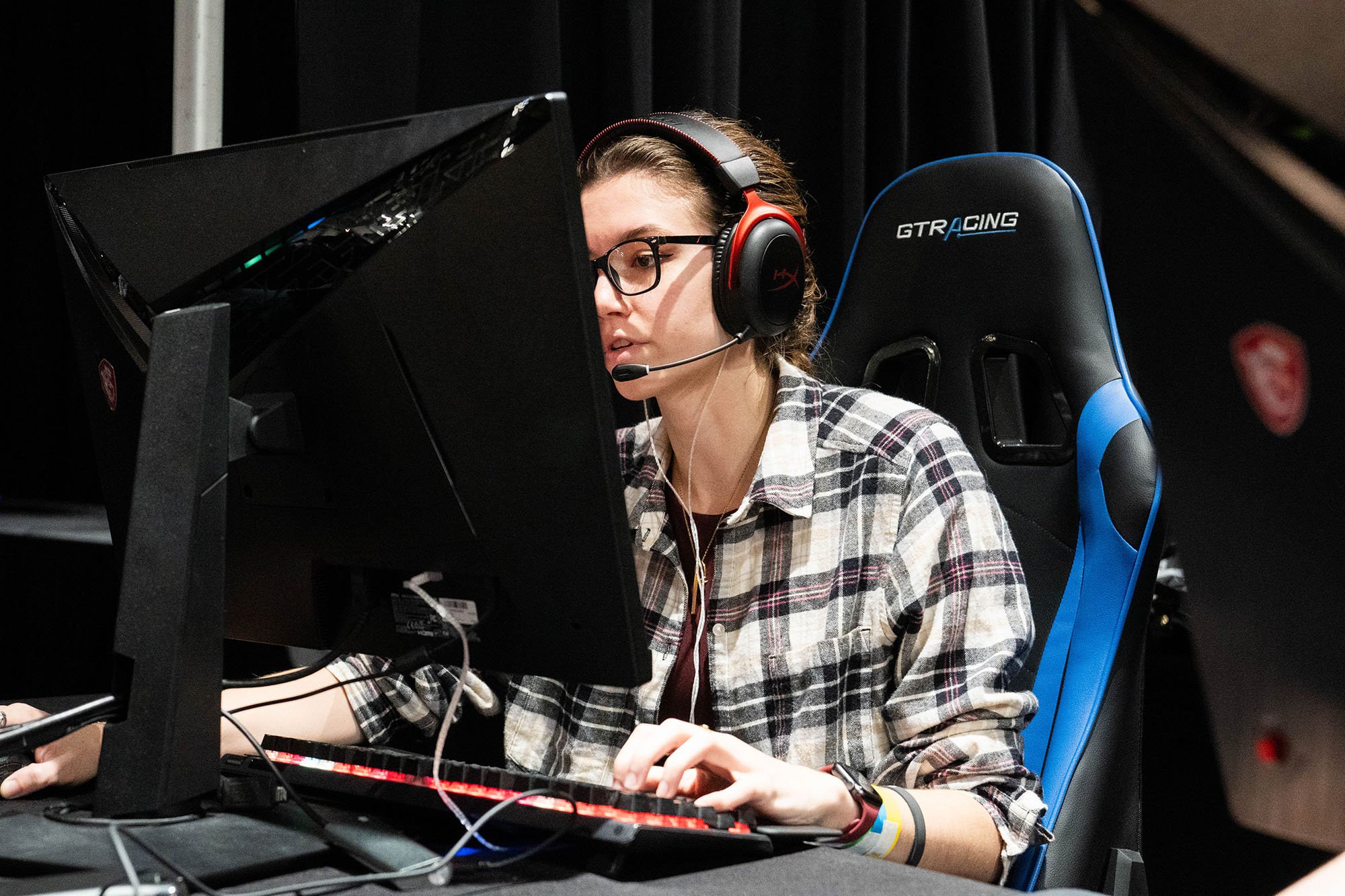
Stone goes on to say if they don’t yell back, the harassment can get worse. “I have found that if I just kind of sit there and take it, it’ll get far worse quickly. But if I yell back, they’re caught off guard, or they’re not ready to take the same shit-talk that they’re giving.”
As the years have passed since Gamergate, Kitelyn says that she’s seen some change, but not as quickly as she would have hoped. “I wish I would have seen things change for the better right away,” Kitelyn says. “I think it still took us a little bit of time. I think there’s quite a few things that really helped highlight and indicate change for the better. I think we’ve got a long way to go, but we’re doing it.”
Identifying the Problem While They’re Young
A lot of the discourse that women face in gaming, as Manankil and Stone point out, is the in-game chat in competitive and social based games. Many online games allow players to use voice chatting in-game to allow for team strategy. It can also produce funny moments that are forever immortalized on YouTube (Leroy Jenkins set the standard for iconic voice chat).
Many gamers like to attribute the early days of Halo and Call of Duty as the time when in-game chat gave them their thick skin. At the time, voice chat on consoles was lobby based with open microphones, so people could use that time to smack-talk their opponents. As people learned they could say anything they wanted without consequence, these lobbies became full of toxicity, with homophobic slurs and racism rampant throughout. And if a female joined one of these lobbies, they would be told they didn’t belong, that they should be in the kitchen making other players a sandwich, and often escalating into sexual harassment.
As Freed points out in his research, online communication is an inherent part of the gaming experience, and a lot of the toxic masculinity that happens in gaming can be explained by Albert Bandura’s social learning theory.
According to research done by Paul Deeming and Laurie Lee Johnson for the Journal of American Deafness & Rehabilitation Association in 2009, Bandura’s social learning theory suggests that observational learning can have powerful effects, and the effect is enhanced when the observers – in this case, the average gamer – believes that the person demonstrating the behavior – the toxic gamers – is similar to themselves.
Gamers are learning toxicity firsthand – from other gamers. So, what can be done to stop it?
Kitelyn believes that it all starts at the youth level. “I feel that we all need to support marginalized genders and races starting at the youth level,” Kitelyn said. “That’s what we need to see major progress industry wise.”
When Danielle Johnson, the executive director for the Texas Scholastic Esports Federation (TEXSEF), was still working in EdTech, she spoke with a woman who went to a few esports sessions that were to help bring esports awareness and options to the schools. And when Johnson asked about the takeaways from these sessions, the woman replied that there should be different leagues for girls and boys, so girls don’t get harassed.
It was then that Johnson knew she needed to be involved in esports at the school level because, as Johnson said to the woman, “that’s bullshit. We teach boys not to be assholes.”
Johnson used this energy to submit her idea to bring esports to the schools in Texas to the Google Innovator Program, and toxicity was the challenge that she wanted to tackle head on. “I submitted esports as kind of my problem of there is this toxic community,” Johnson said. “And if we start these programs in schools, as these kids grow up, will that community change? The answer is yes, unequivocally yes.”
Thanks to her efforts to grow TEXSEF throughout the state of Texas, Johnson says they will have more than 75,000 students competing this year.
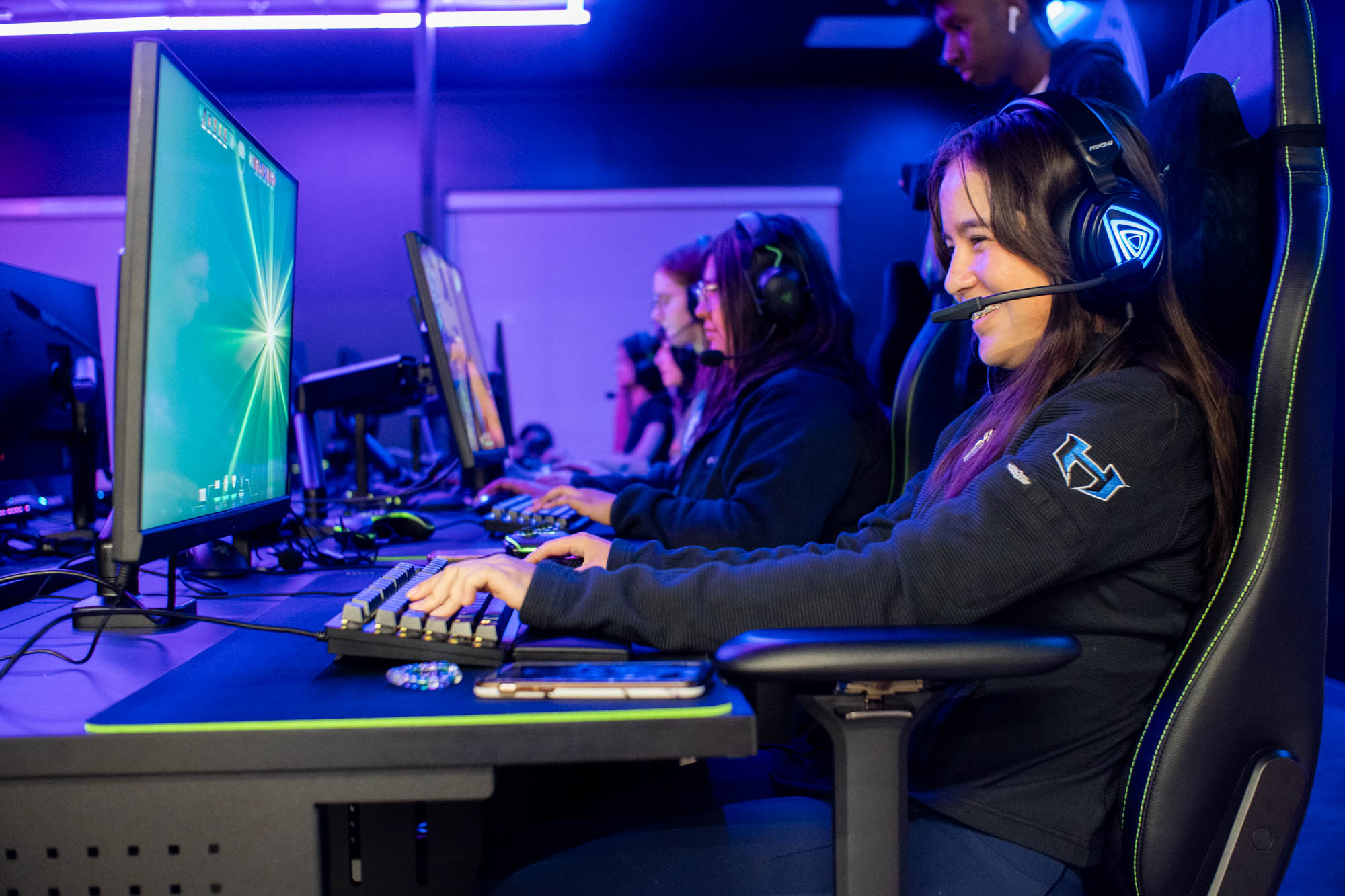
And despite her intentions to see boys and girls playing together, Johnson has embraced the schools that have formed all girl teams. Hebron High School in Carrollton, Texas, is one of two all-female rosters in the state, and according to their Instagram, they finished 7-3 in their debut fall season.
Johnson says that she wants all of the teams, whether all boys or co-ed, to have the same uplifting positivity that the all-female teams have.
“The girls Valorant team, when you hear them talk, it’s almost like if you didn’t know that it was an esports team, you would think it was a bunch of cheerleaders because they are incredibly positive. They like love lifting each other up,” Johnson said.
Rebecca Dixon, co-founder and CEO of the*gamehers, says that one of the conversations that happens quite often in the organization is whether or not the problem with toxicity starts at the youth level. “Do you start early talking to middle school boys and teachers and the sort of the pipeline, or do you address it right at the top and the C-suite and publishers and I think the answer is yes, to all of it,” said Dixon.
Starting at the youth level allows for the social learning theory to be used in an effective way; male and female students compete together and learn the pillars of sportsmanship and fair play from each other, and they can take that into their private online games.
Collegiate Teams on the Rise
In an AP report from 2021, around 90% of roster spots on collegiate esports were male, with around 89% of scholarships being funded to male players. Despite this, many teams are seeing more women and marginalized genders joining their rosters, showing a hopeful sign that battling toxicity at the school-aged level will allow for females to be more open to participation.
Collegiate programs like Pace University saw their percentage of women on their school’s team rise from 19% to 28%. In September, West Virginia University became the first collegiate program in the country with an all-female varsity Rocket League team. And at Cal State Fullerton, an advocacy group called Women in Gaming was formed to coincide with the Gaming and Esports club on campus, showing how women across the gaming community are treated and the issues that are faced.
Kitelyn says that some programs are going above and beyond to make sure their schools are creating safe and diverse programs, like Shawnee State University in Portsmouth, Ohio, led by Travis Lynn. “Travis is very hell bent on creating a good gender diversity within opportunities within their program. And so, they had reached out to me and said, you’re never going to guess this, but I think I have an all-women’s Overwatch team,” Kitelyn said. “And I said, that’s amazing that I think that’s unprecedented. And they said they also have women in Smash (Super Smash Bros.), which is also impressive because women of the fighting game community are a special breed.”
The Full Sail Armada esports team has women and non-binary players of their own, and in 2022 they were awarded Up and Coming Collegiate team at the*gamehers awards for their commitment to inclusivity. Kitelyn says that changing her perspective from zero tolerance for toxicity and harassment to one of teaching the correct behaviors made a lot of difference.
“By equipping everyone within our model with the we don’t do this, we don’t allow others to do it, we’re going to make this space better for everybody moving forward, rewarding those that combatted toxic behavior in a professional and helpful and educational way,” said Kitelyn, “as opposed to simply punishing those who were not exhibiting it changed everything, did wonders. It really evolved that whole mindset.”
This past summer, the University of North Texas Esports formed its first all-female Valorant squad, thanks to the help of a sponsorship with a Plano, Texas business called RGB Custom PC’s. The sponsorship helped provide scholarships to each of their players, who before the sponsorship, only had two women in the entire esports program.
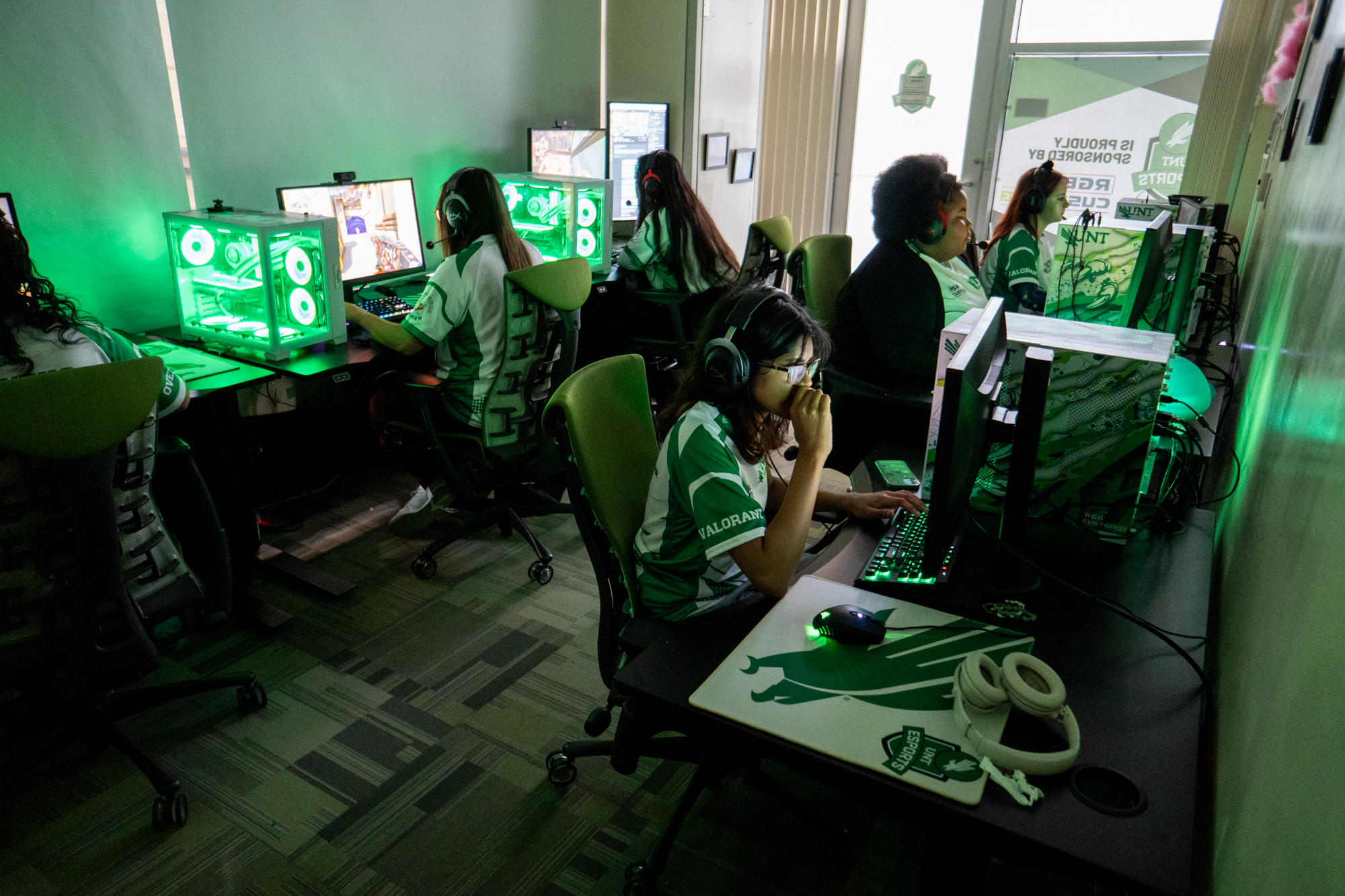
Shelby Wolfe, the team’s captain, says that even though she’s been on all-female teams in the past, that there’s always something different about playing on a team with other women, because they view the games they’re playing with a different set of emotions compared to the male teams.
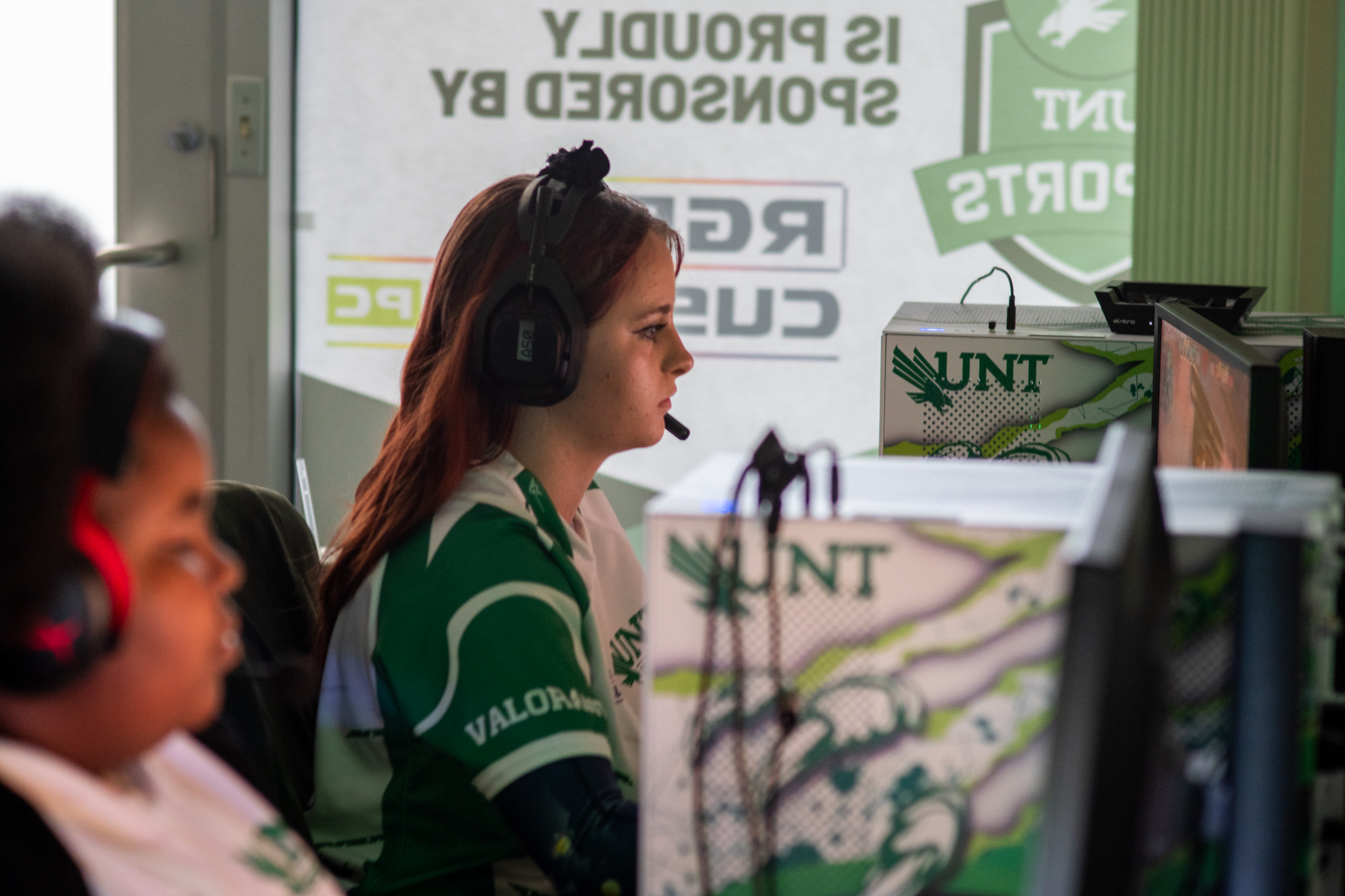
“I mean, it’s always just so, so much lighter. Like the atmosphere is just it’s not as aggressive,” Wolfe said. “Like you get to see the competitive spirit and you know, they’re most likely not going to call you slurs. So, it’s just nice feeling like you’re accepted in a different sort of way, like everybody kind of already knows, you know, she’s just having an off day. You don’t have to explain yourself.”
And while UNT finished 2-4 in their first Collegiate Valorant season, on January 21, 2024 they took 2nd in the Aurora Series: First Light tournament, a collegiate female/marginalized gender tournament. They made an impressive run through the brackets, with the Grand Finals being their only loss of the tournament.
Organizations like the*gamehers are hoping to contribute more to the college scene this year. Dixon says that 100 colleges have already signed a code of conduct with the*gamehers to be inclusive of women, but she says that there’s more in the works. “We are working with a couple of entities that are on college campuses already,” Dixon said. “But the more we can really identify what the tangible items that we’ll be able to kind of offer colleges moving forward, and it’s things like mentorships, access to women in senior leadership positions, also access to men in senior leadership positions, access to jobs, and mental health support.”
One thing that the*gamehers have recently teased via X (formally Twitter) is The TGH Collegiate Clash. The 2024 awards are also on the horizon, with many different colleges and collegiate players, staff, and creators up for a variety of awards for their work in the collegiate scene.
The Current State of Women in Professional Esports
On the professional side, there’s been an uptick of teams and games that have started to embrace having more women and marginalized genders in their competitions. Riot Games, the developers of League of Legends (LoL) and Valorant, previously had been under fire because of multiple allegations of discrimination throughout the company, according to Kotaku, who wrote an extensive piece on the issue. In the years since, they’ve created the Game Changers series for both LoL and Valorant, a program made to elevate women and marginalized genders in the games’ communities.
The LoL version of Game Changers didn’t receive the positive response that Riot Games had hoped for, with many pointing out that the three teams that were involved were all marginalized genders and not female. Even some females were critical of the rosters.
The Valorant Game Changers, however, has been an exceedingly popular series. Women and marginalized genders have been taking the opportunity to compete, whether they play for a professional organization or form teams off-the-cuff for tournaments. Many professional teams picked up rosters, including Team Liquid, Evil Geniuses, G2, Complexity, and reigning 2023 champions Shopify Rebellion. This year’s championship was the most-watched women’s Valorant tournament ever, according to Esports Insider, with 293,000 peak viewers.
While the Game Changers allows women and marginalized genders play against one another, some of the Game Changers teams will participate in co-ed tournaments. In September, the Pittsburgh Knights hosted The Knights Forge, an off-season Valorant event, which found two Game Changers teams playing side by side against male rosters.
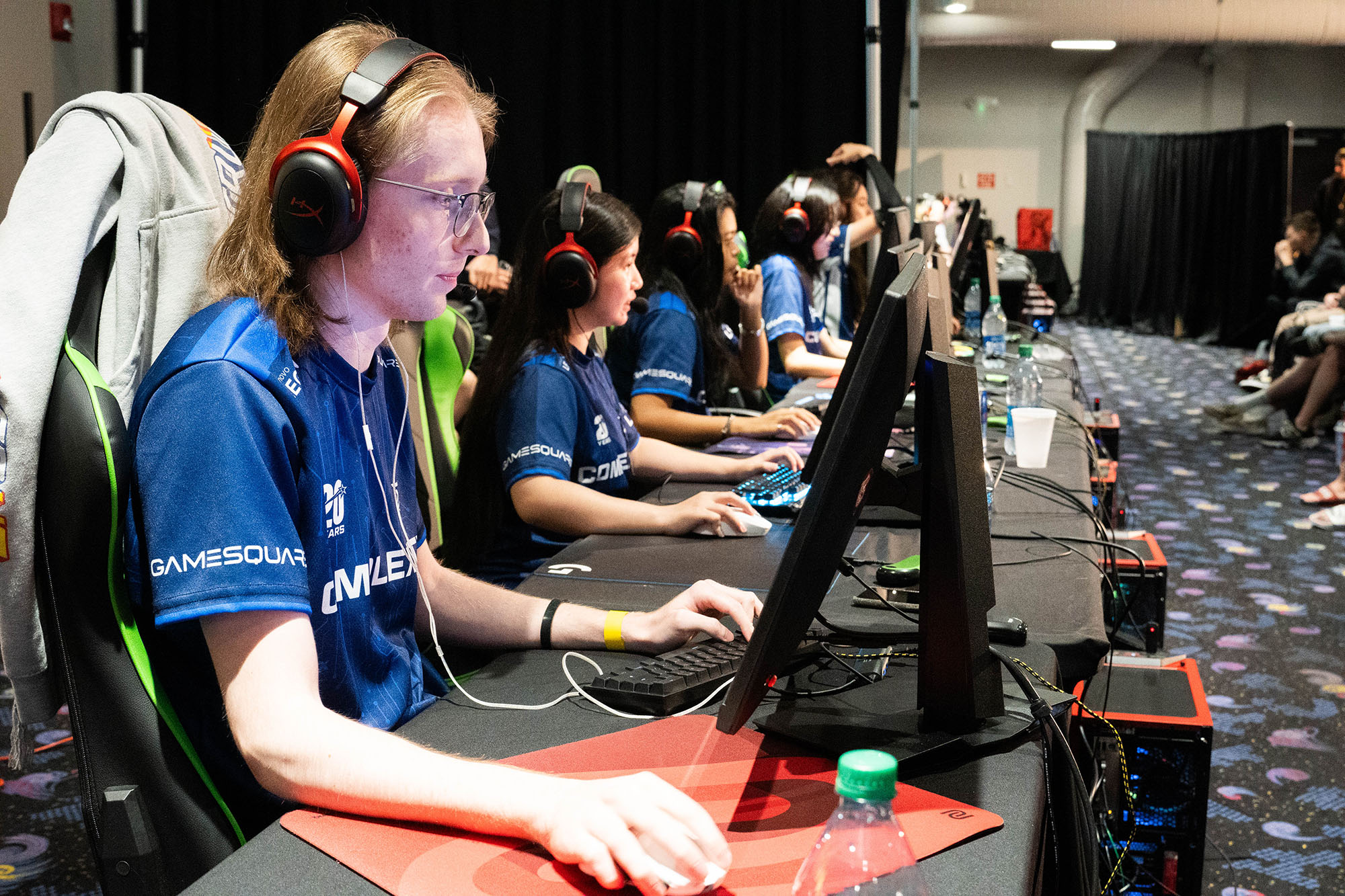

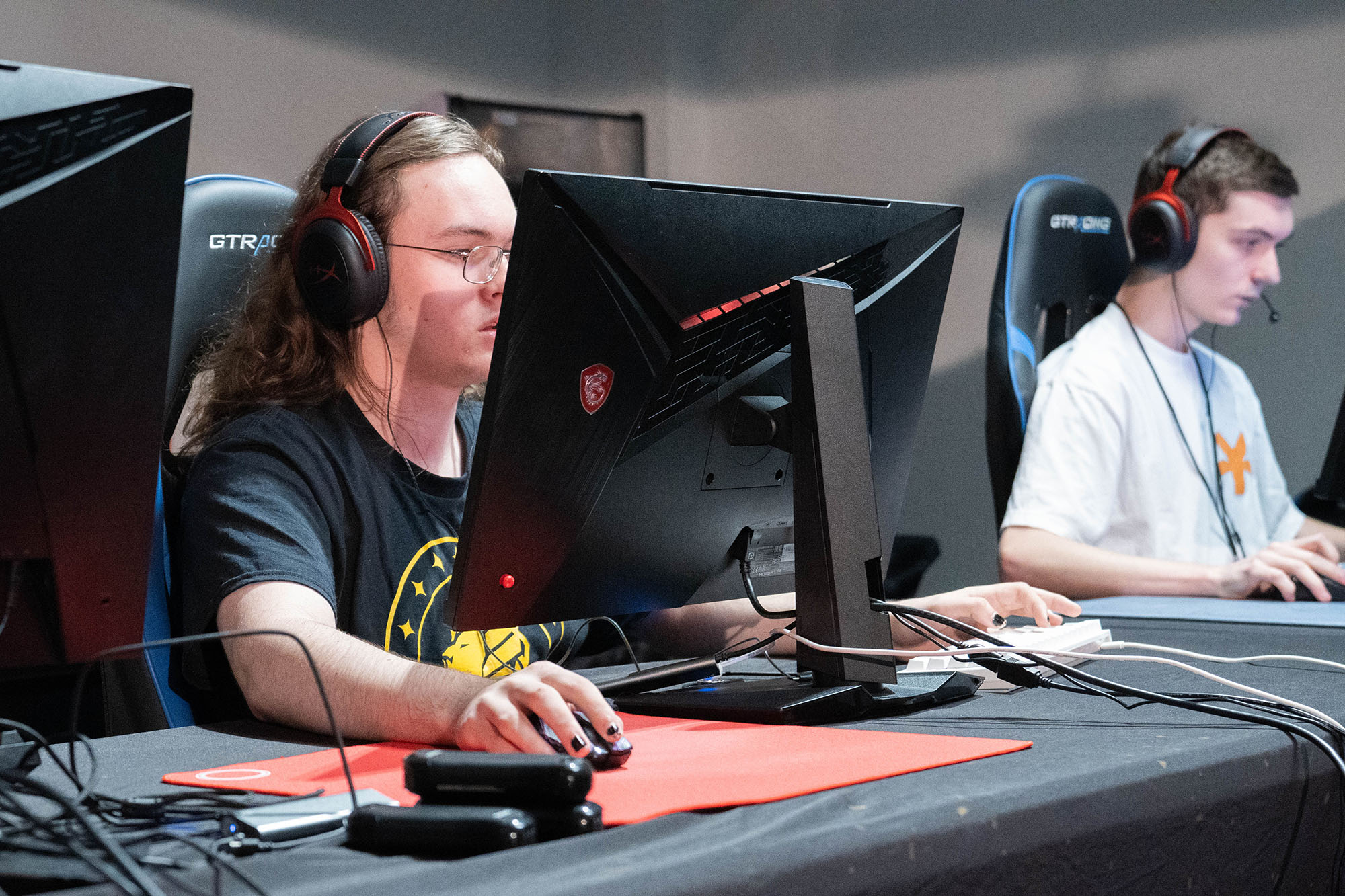

Former Members of Complexity GX3 (Top L), Valorant ShoutCasters (Top R), and members of Uppie’s Kittens (Mid R & Bottom) participating in The Knights Forge in Pittsburgh, PA. Photo Credit Rachel Olsen-Cooper
Lacey Dilworth, a professional Valorant player who participated in the off-season event as a member of Complexity GX3, says that while it’s not normal to see co-ed tournaments, it’s a great opportunity to compete against full male rosters. “I think it’s really great for everyone to see women and marginalized genders competing in co-ed tournaments,” Dilworth said. “There’s been a stigma for a little while where it’s kind of not normal, I would say, for women to be competing against full men teams. But I think every tournament, teams are doing better and better against these top teams on the male side of it. I think it really gives everyone hope, I would say, hey we can do it too, and this space is for us as well.”

On January 23rd, Team Liquid Brazil announced that their Game Changers team qualified for the first split of the VCT Challengers League Brazil closed bracket. They’re the first ever Game Changers team that has made it into the closed brackets, a huge victory not only for Team Liquid Brazil, but for all Game Changers teams. It shows that women and marginalized genders belong in the professional space.
Valorant hasn’t been the only game that has drawn in popularity amongst fans of esports. Mobile Legends: Bang Bang(ML:BB), which is a mobile game similar to League of Legends, brought in around 9 million hours watched, according to Cryptopolitan. Together, Cryptopolitan reports, Valorant and ML:BB accounted for about 90% of the total viewing hours in women’s esports.
Narrowing the Earnings Gap and Proving their Worth in the Esports Scene
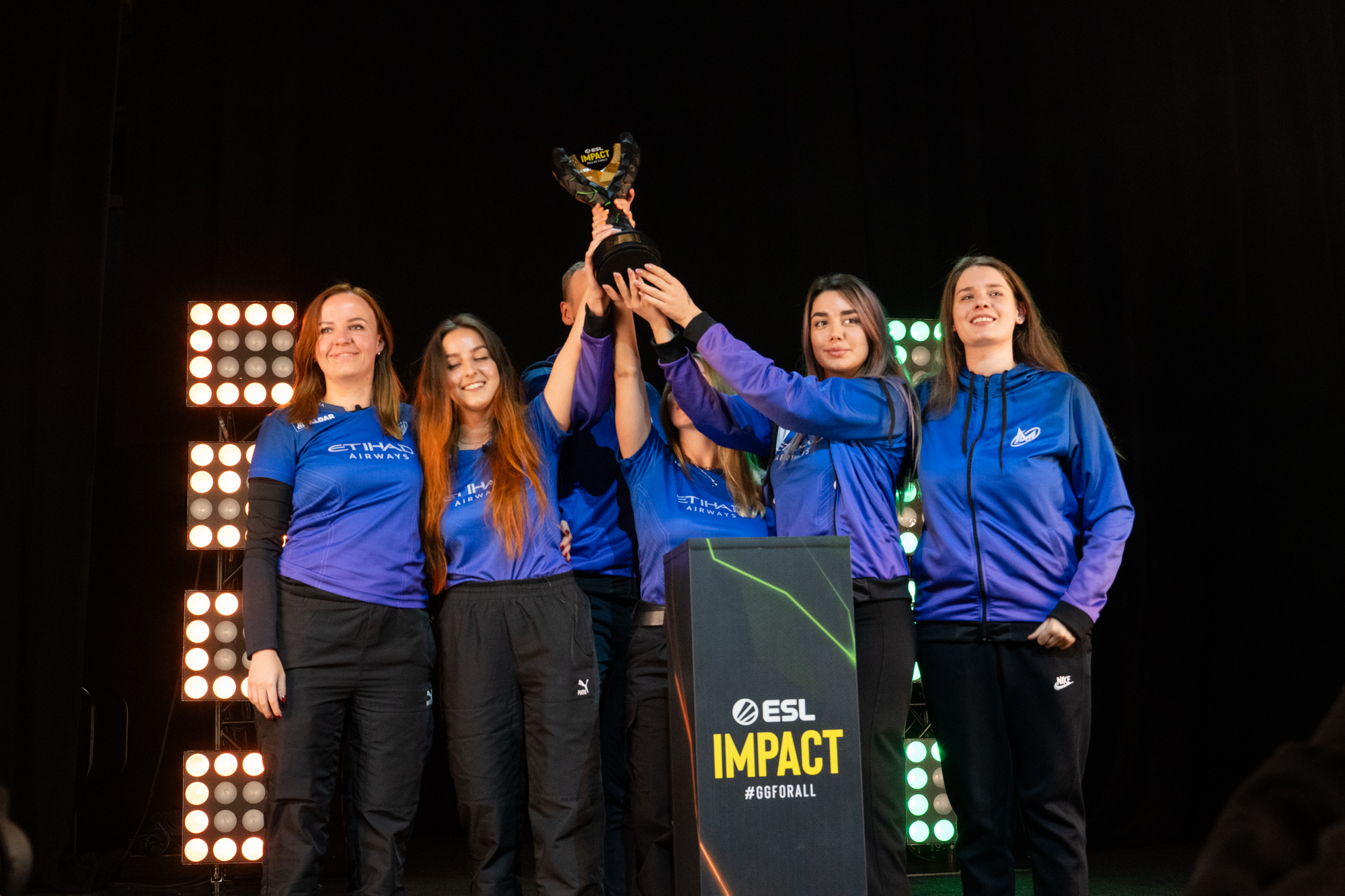
In the professional scene, one of the biggest disparities is the earnings difference between men and women players. Similar to the ratio of scholarships in the collegiate scene, men are found to get paid astronomically higher than women. The highest paid female player, according to Esports Earnings, is Sasha “Scarlett” Hostyn, who has earned almost $459K over her time as a professional StarCraft II player. But on the men’s side of the earnings, Johan “N0tail” Sundstein has earned over $7M.
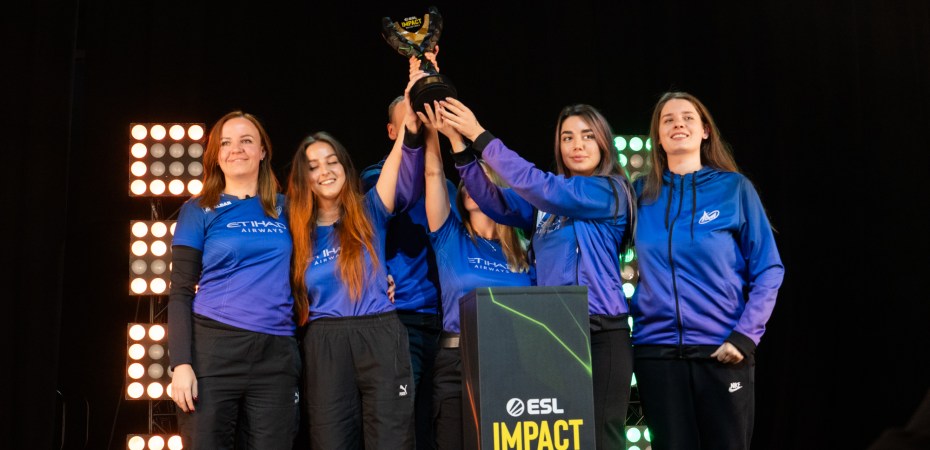
When Nigma Galaxy Female won their 5th straight ESL Impact tournament this past summer at Dallas DreamHack, the overall earnings pot was $123,000, with Nigma Galaxy taking $50,000 as the winners. The male counterpart tournament, ESL IEM, the overall earnings pot was $250,000, with the top team ENCE taking $100,000, doubled the amount that the women made.
Why is there such a difference? According to Femme Gaming, many in the industry say that it’s because women’s skills don’t match up to the male players, even at the physical level. It’s an excuse that men love to tout in game and on social media, especially when it comes to marginalized players. According to a study done by Egil Rogstad for the European Journal for Sport and Society, while men are considered to have a physical advantage over women, these types of physical attributes are unrelated to high performance in esports, allowing men and women to compete at the same level at events.
One major proof that women can hold their own against men at the professional level was when Kim “Geguri” Se-yeon was the first – and only – female player that was part of the now-defunct Overwatch League. According to an article from West Chester University, Se-yeon was one of the best Zarya players in the world, so she was recruited to represent the Shanghai Dragons in 2018. But when she was playing in smaller leagues in 2016, she was accused of using an aimbot (a computer program that aims for the person), which she was later cleared of the cheating accusations by Blizzard, the developer behind Overwatch.
Se-yeon was looked at as a pioneer for women in professional esports, along with Hostyn, but according to an interview with the Associated Press, both would rather be seen as talented gamers, rather than be in the spotlight as female role models.
“Within gaming and esports, scientifically the playing field is level,” said Kitelyn. “As far as the sex you are assigned at birth, there is no benefit.”
Conclusion – What We Can Do to Do Better for the Future of Women in Esports
With the multitude of organizations that exist to help move diversity and inclusion forward in esports, everyone has their own hopes and dreams of what this space will become in the future.
Dylan Odenkirk, a Super Smash Bros. competitor, wants to see more of the bigger companies and organizations that are willing to work with smaller organizations. Odenkirk created Majesty Gaming in early 2023 as a way for women and marginalized genders to feel safe competing in esports, especially in the Smash scene.

“I think when entering the space, it’s intimidating,” said Odenkirk. “And if people don’t have resources or friends or anything to get into it, it’s hard to get into going to competitive tournaments because they’re so male dominated.”
Odenkirk would love to see women competing with men, but also understands that there’s a bridge to fill to be confident enough to compete with men. But she hopes that resources and sponsorships from bigger organizations can help women ease into the Smash and fighting game scene.

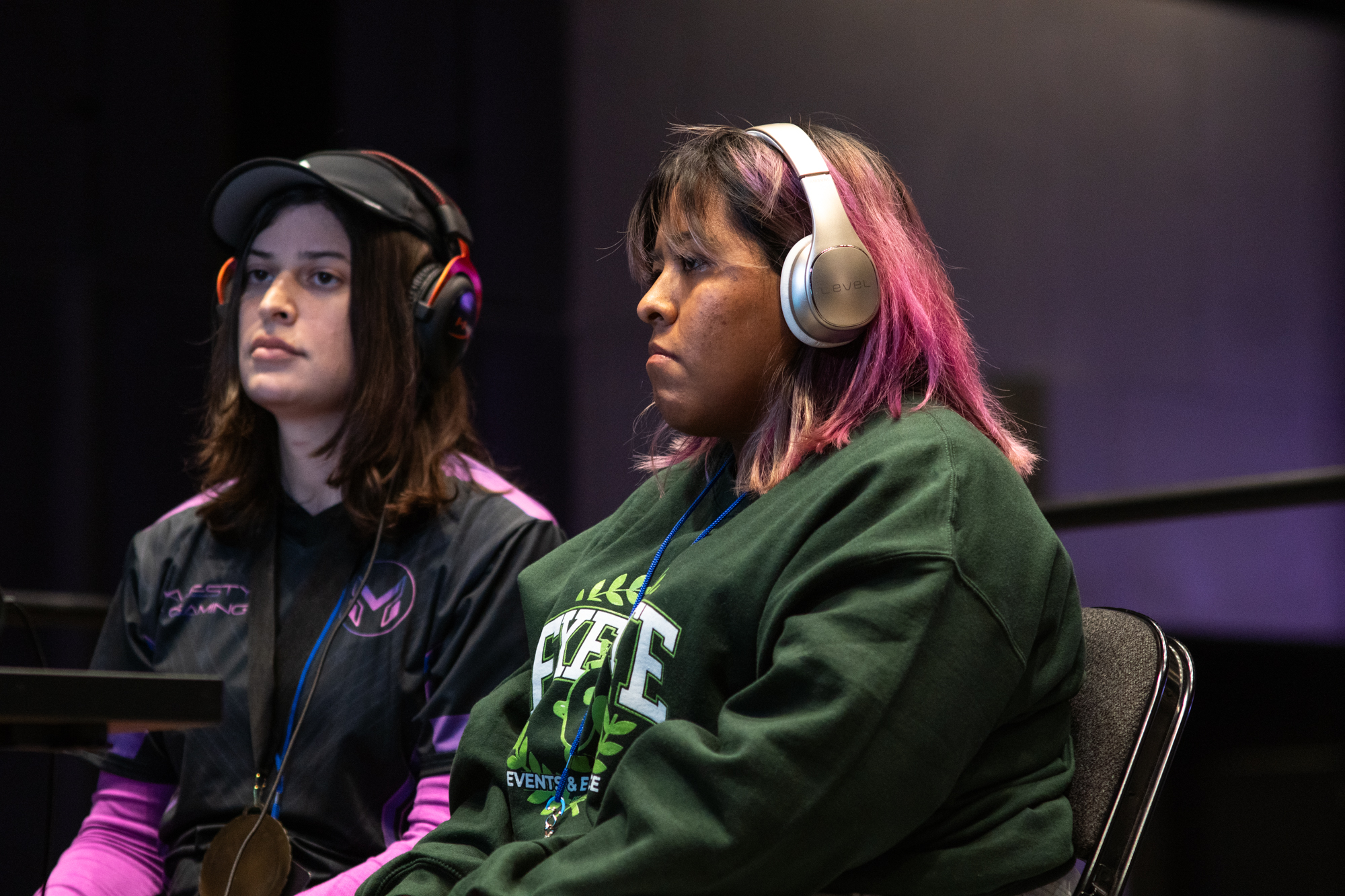
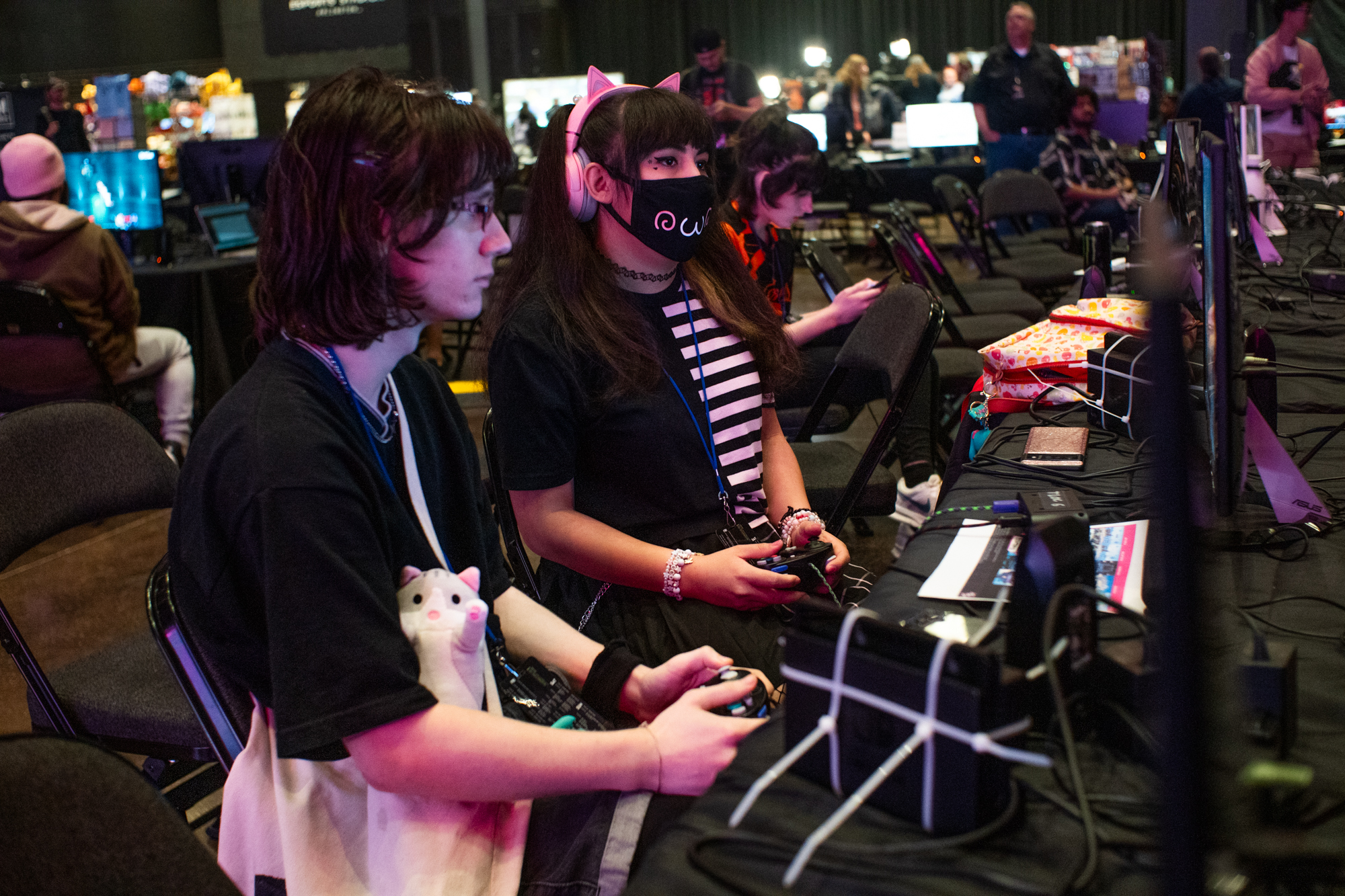
Women/non-binary players playing Super Smash Bros. Ultimate at Low Tier City in Arlington, Texas. Photo Credit Rachel Olsen-Cooper
For Mahwiyat Anwar, one of the members of the UNT Women’s Valorant team, she hopes that the gaming companies start to pay more attention to the way females are treated in game, especially when it comes to banning. Many games have started to suspend or even ban accounts who are breaking community rules around toxicity in game, but sometimes, male players will report the females instead, either because they tried to defend themselves by talking back, or even just for being female.
“I’d like to see the companies do a little bit more to help women because there’s so many times where I would talk back because, you know, they’re yelling at me like, ‘oh you’re a girl’,” Anwar said. “So, I talk back and I’m the one who gets banned? But, you know, just review things a little more thoroughly before we ban accounts.”
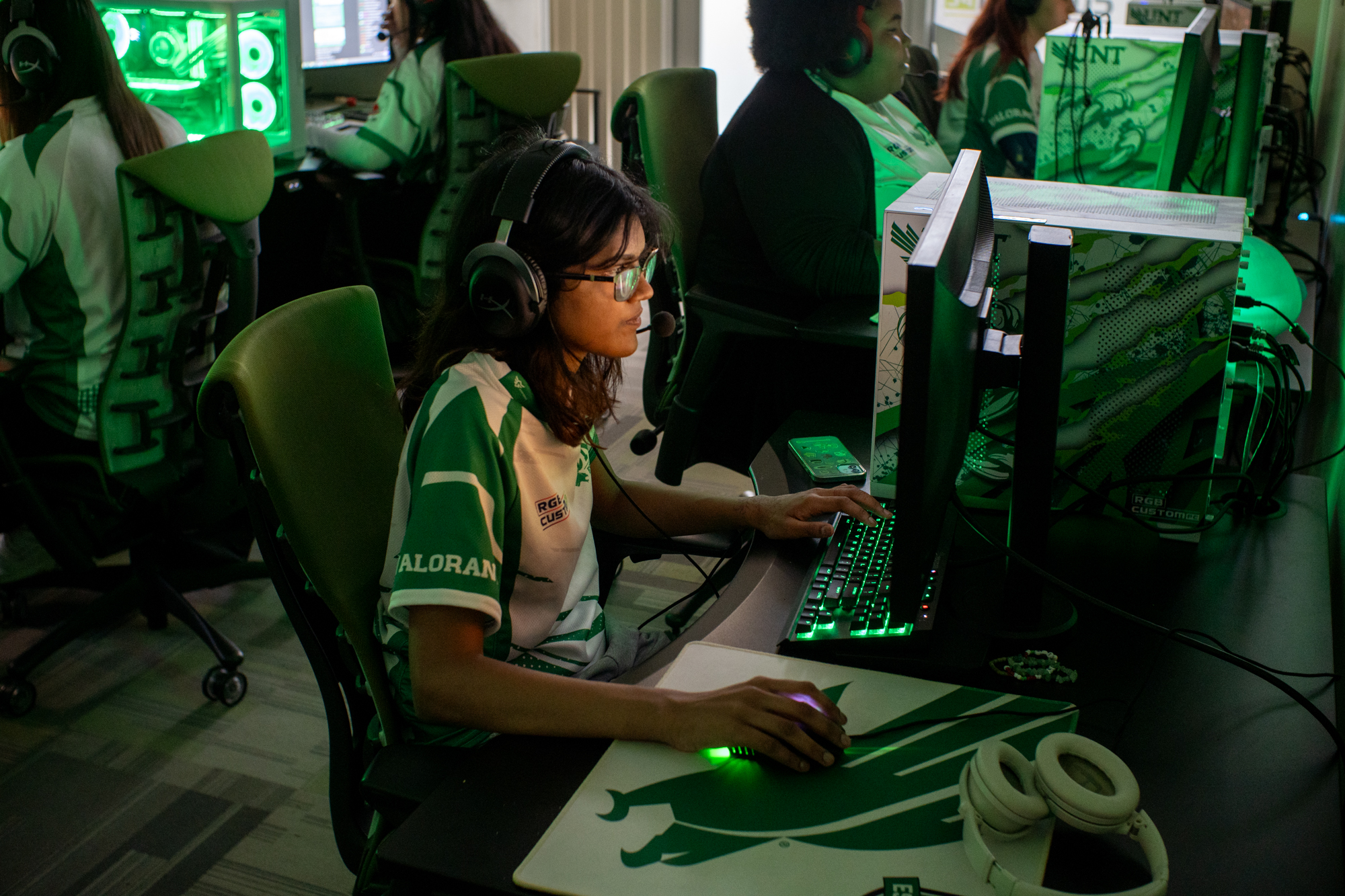
Jayden Luette, a senior at Hebron High School and the founding member of the girls Valorant team, says she would like to see more tournaments for females, as well as more exposure in broadcasts. “They broadcast the males games a lot, but you don’t really find the female teams unless you like, really dig deep to find them,” Luette said.
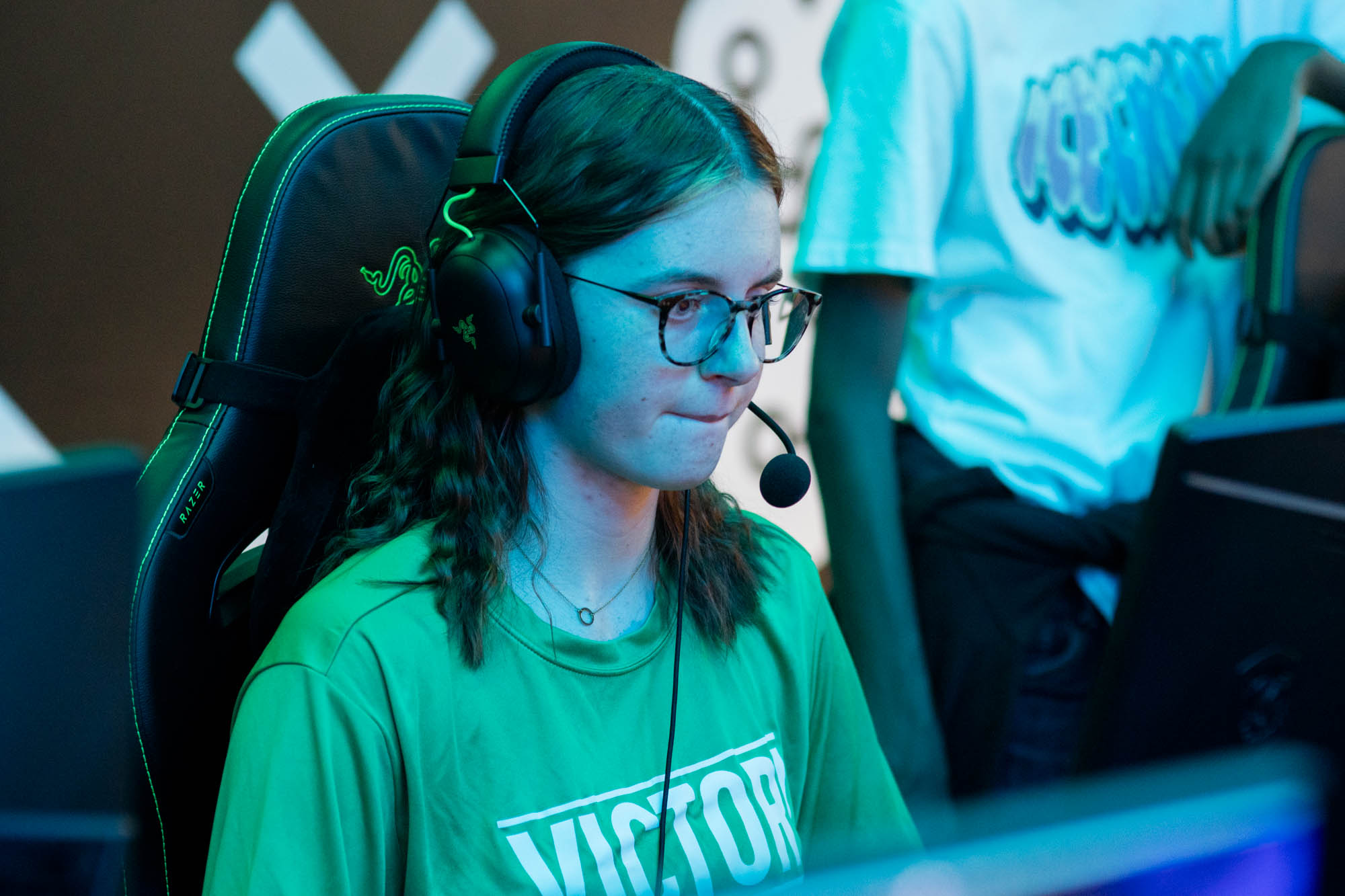
Forbes writes that changes in the gaming environments can help moderate the gaming spaces to combat abuse and sexism, like recording chats and having more integrated ways that players can report other players for inappropriate activities. Forbes also states that gaming companies having a more positive atmosphere around workplaces issues and offering mentorship programs may extend into the gaming environments, creating a better environment for players to compete in.
For Kitelyn, who has seen the industry try to make changes in a positive way during her own journey in esports, says that the biggest thing to create change is not just to talk about it, but to act. “We hear a lot of people that talk. But talk without action is just noise. And so, being able to turn what we feel into something that can be done is really, really important.”
An example Kitelyn gives is how she found herself on a panel of all women, but they weren’t chosen because they were women, rather that they were experts on the subject at hand. “I spoke at a conference in August in Chicago on Scholastic esports,” said Kitelyn. “And I realized that after doing hundreds of panels, that is the first time I’ve ever been on a panel with all women where the subject was not about being a woman. The subject was about Scholastic esports, and they picked four thought leaders, subject matter experts, etc. in the space, and we were all women. And they didn’t try to do that. And that the fact that that happened is really neat. The fact that it is rare is really not neat and it shouldn’t be that rare.”
Kitelyn goes on to say that allyship is another huge factor. “Allyship is huge, and you cannot underestimate the power of allyship, whether it is standing up and making sure someone better has your seat or just amplifying what you see that’s happening, that’s going on, is probably the easiest way to drown out the noise,” Kitelyn said.
Femme Gaming points out that some of the best ways that men can be better allies is to listen and learn, review their own past behavior, and correct it, vocalize support, and include women in their games, whether or not they have a skill level that is similar.
Vocalizing support has been one of the biggest ways that men have recently stepped up to try and change the tides when it comes to defeating toxicity. In a recent post made by X user akaMarx, the Call of Duty player goes off on a rant that ends with him asking women to “stfu & put down the controllers,” believing that he’s standing up for men in the Call of Duty space. When looking through the comments of the viral post, many are condemning his views, with some saying that women shining in the community has been amazing to see.
Before this tirade, akaMarx was participating in a recruiting challenge for SoaR Gaming, a popular gaming organization, to earn a spot on their team. The post caught the attention of one of the original founders of SoaR Gaming a few days after they posted their results.
The winner of the Soar Gaming recruiting challenge? A woman who goes by Monstergurl.
Thousands of men also came to the defense of women and marginalized genders when an X user named MagickMoonshot sent a post about the all-female event she was putting together for women in the Halo community, but then stated she would not be allowing trans players to participate. This post garnered over 4.7 million impressions with over 4,000 comments, most of which were in support of Halo being a community for everyone.
Kitelyn says that the action taken by the Halo and gaming community is what she hopes to see more of, and that action is what is going to drive progress. “The biggest thing to me, goal moving forward in 2024 is to turn tweets into action and keep doing that,” says Kitelyn. “Everything that you say, you have to find some way to be able to implement it. Saying it is really important, doing something about it is way better.”
“The good thing about that awful Halo tweet is that she wasn’t able to implement it. Too much drowned her out,” Kitelyn continues. “And unfortunately for her, but fortunately for the rest of it, it didn’t come to fruition. That’s the definition of what happens when you can’t put action behind what you do. And so, saying that this tournament should be open to all women no matter what they are, does it really mean anything? Creating a tournament that’s open to all women, no matter what they are, is really where progress happens.”
Resources. Sponsorships. Allyship. Taking action. All of this seems like a lot to focus on for someone who wants to help solve the injustices behind diversity and inclusion in esports and gaming. And this is just one sub-section of the culture who want to move the needle. BIPOC representation, the entire LGBTQ+ community, disabled gamers: they all want to have more representation and equality when it comes to esports and gaming.
Sitting in silence will never change the loudest voices. If you’re a gamer, and you believe in the equality of gaming, there’s one simple solution.
Do better.
 The Spawn Room
[…] is another huge step for women in esports, showing that they belong in the industry and that no one can slow them […]
LikeLike
[…] team since last year as one of the few all-female based teams in the collegiate scene. At the time, the team had finished 2-4, but have been dominating ever since. They battled through Aurora Series: First Light to go […]
LikeLike