
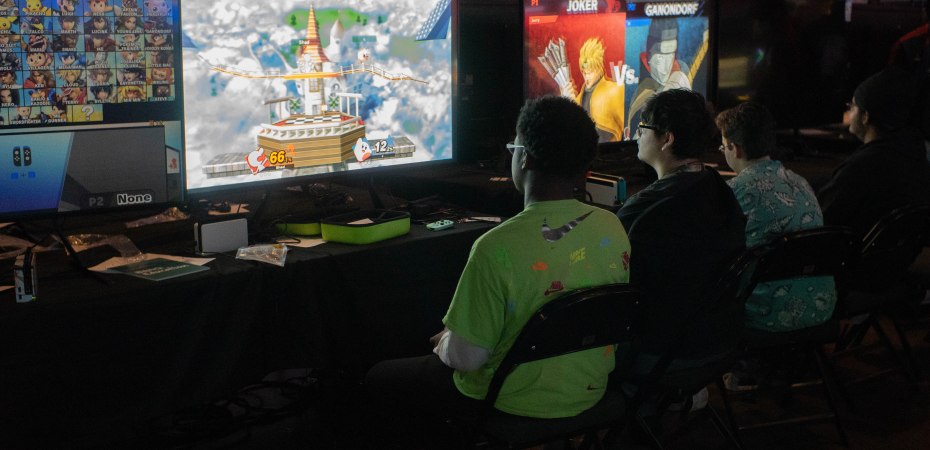
Youth esports league is bringing ways for students to participate in a team sport without having to leave their homes.
In the past, playing video games has been viewed as taboo. A multitude of myths have surrounded the video game community in the past, claiming that video games cause aggression, social isolation, and violence amongst youth, according to PBS. Many parents believe that video games and television are the cause of obesity in children and teens, according to a study in 2020 about the myths of video games.
When youth esports organizations started to become popular, many wanted to show that children can experience gaming the same way they do traditional sports. In July, Karlin Oei and Sari Kitelyn talked about the similarities between esports and traditional sports in programs like EUKSO and XP League.
About a year ago, XP League opened a Dallas, Texas location of the XP League. Jacob Smith, the Area Coordinator for XP League North Dallas, has been with the location since it opened. He has been working in esports since doing an internship with the United States Esports Association. He previously was a sub for the University of Texas Dallas’ Junior Varsity Rocket League team and did some coaching for XP League before being brought on as the North Dallas Area Coordinator.
XP League has a variety of games that the students can play, including Fortnite, Rocket League, Overwatch, APEX, Minecraft, and others. They have coaches and coordinators, just like traditional sports, and the different locations compete against each other weekly. Smith says that modeling XP League after traditional sports makes it easy to understand for everyone involved. “This model is a really great way to make esports really easily digestible,” Smith says, “both for parents, but also for the kids as well, because it’s something they’re already use to.”
Another way that Smith says XP League is similar to traditional sports is that they have weekly practices along with their weekly games. Youth sports will practice at least once a week for their sport, if not every day at the higher levels. Smith says the teams will also practice in the off-season, something that most youth esports don’t do unless the athlete plays in off-season leagues or private coaching. “During these practices we have individual activities, as well as team activities,” Smith says. “They’re getting coached, and they’re practicing building up their skills both in-game, and also soft skills outside of the game.”
Smith says that outside of just learning in-game skills, they are also learning teamwork, leadership, and communication, not only because they’re important in the game, but also because they can translate to skills they’ll need in life as well. He says that while gaming can sometimes be lonely, having them involved in XP League is giving them a chance to make friends and build relationships, even if a child can’t participate in traditional sports.
Jimmy Tran, the Commissioner of the North Dallas XP League, says that their renewed confidence and sense of belonging are some of the biggest successes that they see from the students that are a part of the league. “It’s amazing to see a shy kid join and then grow over time as part of a community of like-minded teammates,” Tran said.
Gaming also has an unfortunate reality of being toxic. It can be easy to fall into a trap of toxicity in the heat of the moment when a game isn’t going well, and people know that they’ll never see their teammates or opponents again, so players will lash out without consequence. Smith says that being a part of XP League can also help with healthy communication, because the students are working together and “seeing” each other every day, even if they physically can’t see one another. “I think putting faces behind the people they’re interacting with, even if they don’t see them in the moment,” says Smith. “It really helps teach them that they do need to be respectful of the people they’re playing with and create a healthy, beneficial environment for everyone involved.”
With all of this said, there can still be a fear from parents of how much is too much when it comes to playing esports. But Smith says it doesn’t have to be an either-or scenario. “One of my players, he not only is competing at a very high level in Fortnite, he’s also on his high school football team and also does competitive dance,” Smith says proudly. “In reality, it’s just one more thing your child is able to do and has the option for, and I don’t see why we need to pick and choose.”
Tran states that the parental response has been positive, despite gaming having its attached stigmas. “Most parents who hear about our program love the fact that we infuse coaching, team building, and life skills development into what their kids are already doing on their own at home,” says Tran. “It’s a win-win scenario for parents, and we are thrilled to provide an avenue for kids to participate in competitive youth esports.
Both Tran and Smith want to see the North Dallas League grow. Tran wants to welcome in more kids to expand beyond Fortnite and start teams based around Rocket League, Valorant, and League of Legends. Smith says they’re planning on holding an open house coming up in the next month or so to allow parents and potential students to see the facilities, view a practice session or match, and just get the feel of how the organization is run to decide if it’s right for them.
Those currently interested can visit https://northdallas.xpl.gg/ for more information.
 The Spawn Room
[…] League combines the ideals of traditional sports with video games, resulting in a youth esports league that gives kids a chance to play with other youth gamers of […]
LikeLike