

Image via Adobe Stock
By Rachel Olsen-Cooper
The popularity of video games has brought backlash due to violence and addiction, but studies are now showing that gaming can help the physical and mental well-being of its players.
Video games aren’t a new phase by any means. Tracing its home console roots back as far as 1972, with the first home gaming system called Odyssey hitting the shelves, and the system Atari gaining popularity in 1975, according to the History Channel. Over time, Nintendo, Sony, and Microsoft have become the biggest names in video game history, paving the way to gaming as we know it today. Schools started adapting learning-based games like Lemonade Stand, Oregon Trail, and Where in the World is Carmen Sandiego into their classrooms on old Apple II computers as a way to teach children everything from math, business, reading, and how not to die from dysentery. Most games were wholesome and family friendly, giving kids, and adults, a fun way to socialize with their friends.
With popularity comes judgement. Video games have been consistently blamed for the decline in the health of Americans, both mentally and physically. Some medical journals, according to the National Library of Medicine, call playing video games an addiction, showing associations to depression and social problems. They’ve also been to blame for violence due to some of the mature and graphic nature of games like Call of Duty and Grand Theft Auto. Research done by the American Psychological Association in 2005 showed that violent video games can decrease socially desirable behavior, such as prosocial behavior, empathy, and moral engagement.
In the late 1990s and early 2000s, thanks to the gaining popularity of the Internet, games like Quake, Counterstrike, and Halo paved the way to esports in the way we know them today. The University of New Haven states that South Korea started to broadcast competitions for StarCraft and Warcraft III in the early 2000s. Local Access Network parties, or LAN parties, were becoming a way for friends to get together and play video games with each other in the same room, but on their own systems and computers. Counterstrike allowed players to work as a team to achieve the common goal of winning a game together, rather than reaching the goal as a single player. And thanks to the emergence of Twitch, the University of New Haven found that esports events were coming into the homes, with people wanting to watch major tournaments for games like League of Legends online.
Now, a new generation of gamers are finding themselves with video games in the classrooms. Games like Minecraft have helped boost interest in STEM. According to Microsoft’s Minecraft Education, a recent study done in Ireland showed that students learning Minecraft in the classroom experienced student collaboration, creativity, and were active participants in their learning. Another study done for the Education Sciences journal has shown that having a class dedicated to Minecraft brought an enthusiasm to not only that class, but changed the behaviors in other classrooms and boosted attendance.
In 2017, the North America Scholastic Esports Federation (NASEF) began as a way to bring esports into the classroom, who now boast serving over 6500 students across 44 states and 12 provinces of Canada, according to Connected Learning Lab. TEXSEF, which is the Texas affiliate of NASEF, held their state championships in Arlington in late April, which saw over 500 competitors, along with student leadership workshops and college recruiting events. The state championships also hosted the Intel Inspired Esports Educator Summit as a way for educators to learn how to build and support esports programs, how to keep their students healthy both physically and mentally, and even taught how to produce esports broadcasts, allowing students who may not be great players but have an interest in esports and production to still be involved in their school’s esports programs.
Overall, studies have shown that video games can improve psychological therapy outcomes, physical therapy outcomes, and physical activity outcomes, amongst others, says the National Library of Medicine. And while some opponents of video games will still blame them for the rise in obesity, games like Dance Dance Revolution, Just Dance, systems like the Nintendo Wii, and the experience of the Xbox Kinect helped bring the fun into exercise by streamlining games that get players off of the couch and into a workout routine.
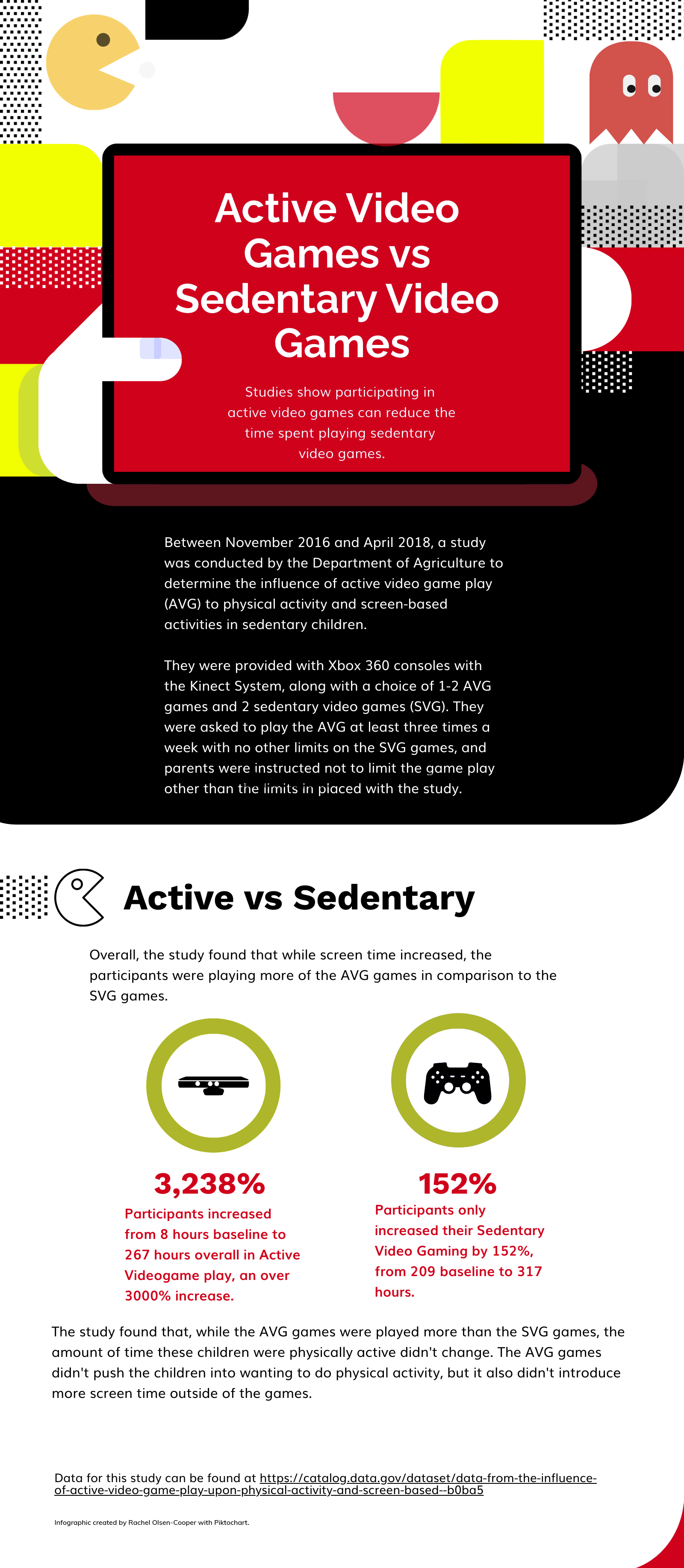
In fact, a study done by the Department of Agriculture looked into whether or not these active video games, or AVG, would help regulate the time spent playing sedentary video games, or SVG, as well as their overall physical activity. When the children began the study, they already had the AVG devices in the household, but overall, the baseline only accounted for 8 hours of playtime, but 209 hours of time spent playing non-active video games. By the time the study completed, the children played around 267 hours of play time, a large increase in comparison to their starting point. And even though they did play more of the non-active games, they increased that playtime by only 108 hours. Even though these children, who were already sedentary, didn’t show a lot of progress in physical activity, they did end up playing the AVG games more than the SVG games during the course of the study, which is even light physical activity in itself.
A sudden increase in popularity of a subject that people may not understand will always bring dissent. But as the popularity of video games, esports, and technology rise, more and more studies will prove that gaming can do good.
 The Spawn Room