
No longer about spending hours in mom’s basement with a Dorito-stained controller.
By Rachel Olsen-Cooper
A large variety of games and top tier production quality have taken professional gaming out of the libraries and into the bright lights. Kids have gone from spending hours playing outside or participating in sports to sitting inside, grinding away at Fortnite or Rocket League in hopes of building a career in gaming. Their setups are massive, with at least two monitors being the standard; one for playing the game, and the other to multitask by watching highlight reels, YouTube videos on the best sniping spots, or watching a creator live on Twitch for inspiration.
All of this is a far cry from the early days of esports. While esports had its beginnings 50 to 60 years ago, it really didn’t become mainstream till the early 2000s. The emergence of games like Halo and Counterstrike, with their multiple player capabilities, led to a soar in players wanting to show that they were the best at their craft.
Joseph Anderson, co-owner of Nemesis Media LLC, an amateur esports team, was bit by the competitive bug in 2005, where he started his career in competing with Counterstrike Source. “Back then, there were less ‘tournaments’ and more LAN parties, where people would bring their PCs to compete against each other.”
LAN – or local area network – is a term that describes hooking together multiple computers or televisions over a network with ethernet cables, allowing multiple people to play a game against each other on multiple screens. Think online before “online” really existed.
“People competed mostly for bragging rights because you were lucky to win thousands of dollars for a championship. Nowadays, you can win that in the smallest local events.”
Korey Edgington, manager of Contender Esports Tulsa, a gaming and training facility in Tulsa, Oklahoma, agrees. “All of us guys, we all knew each other. We didn’t have big cash prizes; it was mainly for bragging rights back then.” Edgington played Halo 2 from 2008 to 2011.
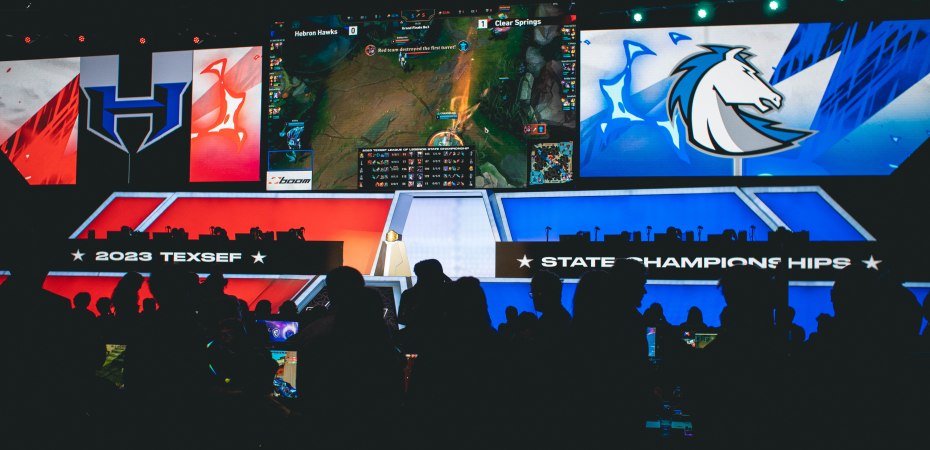
While it might have been all fun and games, it’s much more serious now, with huge production quality and television broadcasts. Games like League of Legends used to feature on ESPN.
“We just played on the big tube TVs with all of us sitting around them, all of them hooked up to ethernet,” Edgington added. “And with how big these people are now, and how much they get paid? I wish I would have stayed in it because I would be making the big bucks.”
However, the rise in esports popularity has changed the feel of the sport, says Anderson. Games like Overwatch and Call of Duty now have franchised cities for their teams. “It used to be about doing events for the community and the players, but franchising has separated the amateur teams from the pro teams. The community used to be tight knit and had a true love for esports. The days of Cinderella stories are no longer a possibility.”
 The Spawn Room